Showing posts with label muhasabah. Show all posts

Thursday, 3 January 2013

Kanak – Kanak, Masjid, & Saf

Satu Maghrib beberapa minggu yang lalu saya pergi menunaikan solat di salah sebuah masjid di Kuala Kangsar. Biasanya saya akan terus bergegas ke saf paling depan, tetapi kali ini saya ambil keputusan untuk berlegar – legar di bahagian belakang dewan solat sehingga semua orang sudah berada dalam saf. 

Mengapa?

Adakah saya hanya mahukan pahala kambing?

Tidak. Saya sebenarnya mahu memerhatikan Pemegang Mohor Saf Kanak – Kanak menghimpunkan semua kanak – kanak ke dalam satu saf khas di belakang. Setelah tuan Pemegang Mohor masuk saf saya terus bergegas ke saf kanak – kanak tersebut dan menarik seberapa banyak yang boleh untuk ikut saya ke saf depan, termasuk seorang budak yang nampak gaya macam ketua hulubalang kanak – kanak.

Setelah solat, saya bersembang dengan ‘ketua’ tersebut, 

Saya: “Berapa umur kamu ni, yob? Dah sunat?” 

 Dia: “11. Dah.” 

Saya: “Dahtu, apa koje kamu sembahyang kat belakang pulak?”

Dia: “Pakcik tu tak bagi.” 

Saya: “Lantak je dia tu. Lain kali kamu tunggu dia dah angkat takbir, lepas tu lari ke depan. Budak – budak nak sembahyang dengan orang tua boleh je. Belakang imam je kamu tak boleh. Dulu pakcik belajar kat luar Negara, mana ada saf kanak – kanak. Kanak – kanak kerja dia masuk celah – celah orang tua yang renggang saf.” 

 Saya sebenarnya memang cukup pening kepala dengan adat meletakkan kanak – kanak dalam saf khas. Tambahan pula, saya cukup sakit hati, marah tak terkata apabila di masjid kariah saya di Kuala Lumpur ada “Saf OKU.” Cukup menghinakan! Alasan yang diberikan oleh orang tua dalam masjid itu dia membatalkan saf. Batal saf apa lagi? Kalau nak pakai pendapat keras, saf Jemaah dah batal sejak hari masjid dibuka. Sebab tak bersentuh bahu, kaki. Boleh main konta konti kat celah – celah tu.

Alasan biasa untuk mewujudkan saf kanak – kanak,

1. Belum sunat. Takut menitik air kencing batal wudhu’ terus batal solat. Rosak saf. (Tak usah mengada – ngada. Soal batal atau tidak bukan menjadi persoalan sehingga zahir tanda – tandanya. Orang tua pun ada je yang terkincit dalam diam lepas tu buat muka comel. Ada atau tak ada kanak – kanak saf memang dah rosak. Geli sangat nak bersentuh bahu, takut orang kampong kata kedi (gay). Kalau dah rosak saf, baiki lah saf tu.)

2. Kanak – kanak buat bising. (Memang lah. Dah kamu gatal sangat kumpulkan mereka sekali. Dah nama kanak – kanak itulah fitrahnya. Penjajah pakai sistem pecah dan perintah. Gunalah dalam masjid. Letakkan sebelah ayah, penjaga atau sesiapa sahaja, dia akan diam dan ikut solat. Saya tahu; saya dah perhatikan fenomena ini selama saya bawa kanak – kanak ke saf depan. Dia akan wirid dan berdoa sekali sebelum mencari rakan seperjuangannya.)

3. Kanak – kanak busuk. (Kamu pun busuk jugak. Hisap Gudang Garam di luar masjid.).

Sabda Rasulullah,

“Hendaklah berdiri mengiringi di belakang aku orang yang sudah baligh dan berakal, kemudian mereka yang berikutnya, mereka yang berikutnya. Jaga-jagalah kamu dari hingar-bangar seperti pasar”. 
 [HR: At-Tirmizi].  

Ulama’ mazhab Shafie pula berpandangan,

“Sunat meletakkan kanak-kanak (yang sudah suci) itu diselang-seli dengan orang dewasa bagi mereka belajar melakukan solat”. 

 Imam al-Khatib al-Syarbini pula menjelaskan,

“Perbincangan tentang susunan saf itu adalah apabila jemaah datang serentak, tetapi sekiranya kanak-kanak datang awal, maka jangan diundurkan mereka untuk memberi tempat kepada orang dewasa yang baru datang, seperti itu juga kalau mereka lebih awal berada di saf awal, maka mereka lebih berhak menduduki tempat tersebut, menurut pendapat yang sahih…. Adapun dibelakangkan kanak-kanak daripada orang dewasa seperti yang diperkatakan oleh al-Azraie apabila saf orang dewasa telah penuh, tetapi sekiranya terdapat kekosongan pada saf orang dewasa maka ianya diisi dengan kanak-kanak.” 
[Mughni al-Muntaj]

Jelas daripada apa yang dikatakan; jika kanak – kanak yang sampai masjid dulu, maka menjadi hak mereka mana – mana saf yang kosong, demikian juga jika saf orang dewasa terdapat kekosongan maka saf tersebut perlu diisi dengan kanak-kanak. Tidak terdapat di sana saf yang dikhususkan kepada kanak-kanak.

Lain pula halnya di belakang imam; mestilah orang yang berilmu yang boleh menegur imam kalau tersilap atau ganti imam kalau imam ‘buat muka comel’. Kanak – kanak dan orang tua tidak berilmu tidak boleh berdiri di belakang imam. Kalau tak semua pakat buat muka comel.

Persoalan sebenarnya yang timbul di sini bukan pada hal “Bolehkah kanak – kanak pergi ke saf depan?” tetapi pada hal “Mengapa kanak – kanak perlu ke depan?” Pada hari ini sudah jelas sangat orang – orang Islam sudah hidup dalam kejahilan, dalam kemaksiatan yang pekat. Sedikit demi sedikit mereka menjauhkan diri dari Islam, menjauhkan diri dari majlis ilmu, dan menjauhkan diri dari masjid.

Antara sebab jauhnya sesorang itu dari masjid ialah kerana layanan dalam masjid. Sewaktu saya kecil, saya antara yang sering ditolak ke saf belakang walaupun saya dah khatan sebelum saya masuk tadika dan sudah bersekolah. Geng – geng masjid saya waktu itu ada yang menjauhkan diri dari masjid kerana “benci betul kat orang tua tu; orang datang sembahyang dia halau pergi belakang.”

Dua tahun saya membesar di England, dua tahun menjadi mahasiswa di Australia, masjid di Turki, Arab Saudi, Mesir, Korea dan negara – Negara Eropah saya pernah solat, tidak pernah saya jumpa saf kanak – kanak. Bahkan kanak – kanak ditolak sedepan yang boleh bagi meraikan kehadiran mereka ke masjid. Di negara ini rata – ratanya ada masalah menyusun priority terhadap masalah – masalah semasa.

Umat Islam leka dalam bersolat kita sibuk bahas bolehkah berdoa ramai – ramai, ramai orang kesukaran untuk mendirikan rumahtangga kita gatal letak ‘flow-chart’ prosedur memohon kebenaran berkahwin dan denda RM1000 atau penjara 6 bulan kalau tak daftar betul – betul, ramai umat Islam makin tak reti ugama sendiri, kita sibuk dengan meng-khawarijkan ulama’, kanak – kanak renggang dengan masjid, kita sibuk mewarisi adat pepatih yang entah bila mulanya dan sebab apa.

Janganlah dijauhkan kanak – kanak daripada orang tua dalam solat. Ajaklah mereka untuk solat di sebelah kita. Ia memberi peluang untuk mereka memperbaiki solat, dan merapatkan mereka dengan orang tua, dan mudah – mudahan di dalam jangka masa panjang menjadikan mereka mesra masjid.

 Dan jangalah sibuk sangat pasal kanak – kanak berlari – lari. Itu fitrah mereka sebagai golongan yang belum akil baligh. Letak mereka di sebelah kita, dan mereka diam dan turut bersolat.

Friday, 11 November 2011

'Eiduladha Sermon 2011: The Sacrifices of Life


On this day, I was asked again by the Sri Lankan Muslim Association to lead the eid prayer and give a sermon. Given the examination period, the sermon was not as intense as the 'Eidulfitr sermon. Nevertheless, the main thing was to convey the lessons learnt from 'Eiduladha.

The sermon took place at a community hall in Oakleigh.


FIRST SERMON

Praise is to Allah who hath guided us to this; and we would not have been guided if Allah had not guided us. We praise Him, we seek His help, and we ask for His forgiveness. Whomever Allah guides, no one can lead him astray, and whoever is led astray by the will of Allah, no one can bring him back.
We bear witness that there is but one Allah, and Muhammad S.A.W. as his messenger, and the last messenger appointed by Allah.

O servants of Allah! Fear Allah! Fear Allah the way He deserves to be feared. And do not die as Muslims in full state of submission to Allah.

My dear brothers and sisters,

Today we celebrate the day of ‘Eidul-adha, in conjunction with two important things in Islam;
1. The ritual of hajj, which makes one of the five pillars of Islam
2. The ritual of sacrifice, to enliven the symbol that was performed by the prophet Ibrahim a.s.

With the conjunction of hajj which has been made compulsory by Allah to those who can afford so; they answer the call of Allah to perform hajj.
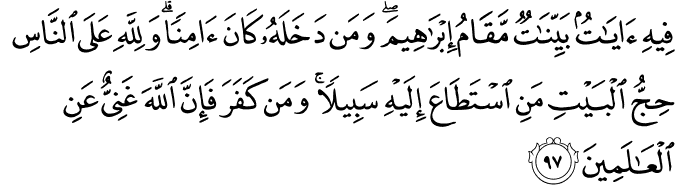


“…and pilgrimage to the House is incumbent upon men for the sake of Allah, (upon) everyone who is able to undertake the journey to it; and whoever disbelieves, then surely Allah is Self-sufficient, above any need of the worlds.”
[Aali-‘Imran, 3:97]


Ever since the month of Shawwal, people have been on pilgrims to gather at the holy city of Makkah to answer the call of Allah, they answer with hearts of faith, performing what has been appealed by prophet Ibrahim a.s.; performing the hajj, worshipping the one Lord, facing in the one direction, following the path of prophet Muhammad S.A.W., and becoming an ummah that has been united under Islam, as how Allah S.W.T. has commanded:



“The Believers are but a single Brotherhood: So make peace and reconciliation between your two (contending) brothers; and fear Allah, that ye may receive Mercy.”
[Al-Hujuraat, 49:10]


The prophet Muhammad S.A.W. is the last prophet appointed by Allah as the messenger to mankind, which comprises of different nations and descendants, of different backgrounds, rank, wealth, and knowledge. They have been called upon to unite in the name of Islam, as how Allah has advised in the Quran:



“O mankind! We created you from a single (pair) of a male and a female, and made you into nations and tribes, that ye may know each other (not that ye may despise (each other). Verily the most honoured of you in the sight of Allah is (he who is) the most righteous of you. And Allah has full knowledge and is well acquainted (with all things).”
[Al-Hujuraat, 49:13]


From a distance everyone looks the same; they wear the same garments, each of them not revealing their racial background, be they Arabs, Africans, Europeans, or Asians. No one knows who is a president, who is a cleaner, who is a minister, who is a civil servant.


The ritual of hajj witnesses the mass gathering of Muslims from the far corners of the world, glorifying the oneness of Allah upon wearing their ihram clothings by chanting the talbiyah,

“Here I am at Thy service O Lord, here I am. Here I am at Thy service and Thou hast no partners. Thine alone is All Praise and All Bounty, and Thine alone is The Sovereignty. Thou hast no partners."

They gathered despite their differences in nationality and language, not being able to understand each other’s conversations, with different ways of life, with different cultures and situations; some being too rough, some being too soft, and some being mediocre.

And in those situations, they have been commanded to perform hajj with the spirit of brotherhood, which becomes a test for them.
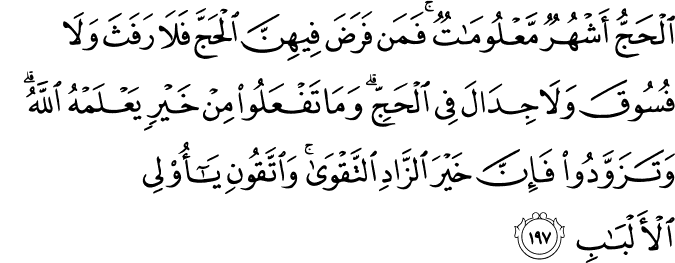


“For Hajj are the months well known. If anyone undertakes that duty therein, Let there be no obscenity, nor wickedness, nor wrangling in the Hajj. And whatever good ye do, (be sure) Allah knoweth it. And take a provision (With you) for the journey, but the best of provisions is right conduct. So fear Me, o ye that are wise.”
[Al-Baqarah, 2:197]


My dear brothers and sisters,

Today we are reminded again of the life of Ibrahim a.s., the prophet chosen by Allah, who became an example and role model to all of mankind. Allah said,





“And who would be averse to the religion of Abraham except one who makes a fool of himself. And We had chosen him in this world, and indeed he, in the Hereafter, will be among the righteous. When his Lord said to him, "Submit", he said "I have submitted [in Islam] to the Lord of the worlds.” And Abraham instructed his sons [to do the same] and [so did] Jacob, [saying], "O my sons, indeed Allah has chosen for you this religion, so do not die except while you are Muslims."
[Al-Baqarah, 2:130 – 132]


Ibrahim’s state of Islam was shown with full submission to Allah, willingly prepared to face Namrud, king of Babylon, the strongest empire of his time. Ibrahim did not submit to Namrud and his government, nor did he submit to his father who supported Namrud to an extent where he was sentenced to death by fire, ousted from his homeland by Namrud and his father.

He was then ordered to send his family; his wife Hajar and son Ismail a.s. to a dry valley where there were no foliage, no living soul, no water, and no fire. Ibrahim fulfilled the obligation with total obedience.

When he left his wife and son, he was asked by his wife,

“Did Allah command you to do this?”

“Yes.”

“Then Allah will not abandon us.”

Hajar too submitted to Allah, willingly left alone with her son in the valley without anyone to accompany them. Yet under such circumstances, she managed to hold steadfast while tending to the young Ismail. And when the situation reached its climax, Allah bestowed upon them the well of Zam Zam.

This goes to show that it is Allah who bestows upon us all that we have; wealth, health, scholarships, ease of life; not kings, nor governments, nor people with high ranks. They are but trust holders to all that belongs to Allah. It also shows that Allah’s bounty exists even in unthinkable places.

When Ismail reached an age where he could walk, and where he could help his father with his works, Ibrahim was tested with a command from Allah that he sacrifice his son.
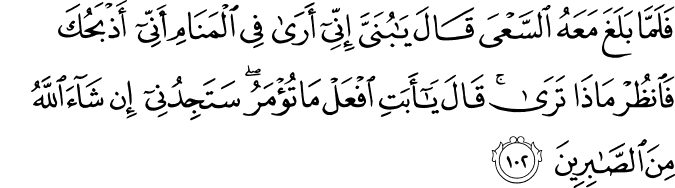


“And when he reached with him [the age of] exertion, he said, "O my son, indeed I have seen in a dream that I [must] sacrifice you, so see what you think." He said, "O my father, do as you are commanded. You will find me, if Allah wills, of the steadfast."”
[As-Soffaat, 37:102]


Ismail who was still young believed in his father’s prophecy, believed in Allah’ commands. And because it was Allah’s command, it must be fulfilled. We belong to Allah. It is He who has created us, who has given us the blessing of life, who has given us all the faculties that we have. All of it belongs to Allah.

Ibrahim knows that he belongs to Allah, and whatever Allah asks, he must fulfil, even though it meant sacrificing his beloved son.


When the command was about to be fulfilled, Allah commanded Jibril to nullify the command, stating that it was merely a test of faith. That is the meaning of Islam, the meaning of submitting to Allah; willing to sacrifice even the priceless of possessions for His cause.

Let us evaluate ourselves. Are we really Muslims who wholeheartedly submit to Allah; believing and accepting all the laws that relate to his Oneness even though we have never seen Him, the laws that relate to His angels, rewards and sins, and the hereafter even though we have never seen them?

The laws that relate to ourselves; Allah’s command that we cover ourselves, that we take only what is Halal and leave all those that are prohibited, that we marry and not commit adultery, and all the laws that define what is good and what is evil?

A true Muslim submits himself to all of His commands. Whatever He commands is beneficial for us, and whatever he prohibits is nothing but disadvantages for us in this life and the hereafter.

A true Muslim never doubts ever for a minute all the laws that Allah has prescribed even but a single letter.

Sadly though, there are many Muslims today who object to these laws, insisting that the teachings of Islam are not conducive in this time and age, insisting that the laws are discriminatory when they know and admit that all the laws found in the Quran and sunnah are authentic. For these people, Allah has questioned them in the Quran,



'Say, "Would you acquaint Allah with your religion while Allah knows whatever is in the heavens and whatever is on the earth, and Allah is Knowing of all things?"'
[Al-Hujuraat, 49:16]


In this verse, Allah is asking them, “Are you trying to teach Me about how life should be led when you know very well that I know best of all the things I have created?”

We are all the creation of Allah, thus only He knows what is best for us.


My dear brothers and sisters,

Never even for once in your life think that just because we were born as Muslims, having inherited the religion of Islam from our ancestors that we have already a first-class ticket to enter Paradise. Just because we are readily Muslims does not give us the authority to live life as if there were no rules.

Even though we have been chosen by Allah to be in the right path, there are chances that somewhere along the way we will be led astray. An opportunity given to a student to enter university does not guarantee his leaving with a certificate. There are chances that he may drop out.
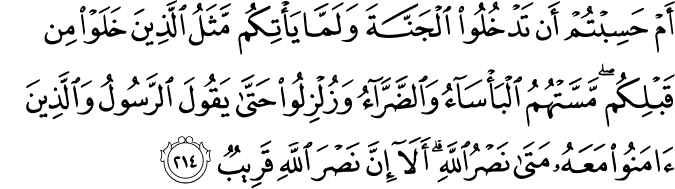


“Or do you think that you will enter Paradise while such [trial] has not yet come to you as came to those who passed on before you? They were touched by poverty and hardship and were shaken until [even their] messenger and those who believed with him said, "When is the help of Allah?" Unquestionably, the help of Allah is near.”
[Al-Baqarah, 2:214]


This life is filled with challenges. Whatever we wish to achieve, we must work for it. There are times when Allah grants us of what we seek, and there are times when Allah does not grant it to us, or postpones it to a later time. That is why we must always be in full state of submission to Allah, for He knows what is best for us, and what is not.

This day of Adha reminds us that we must struggle to achieve our goals in life, that life is full of obstacles, and that we must face it while not losing faith in Allah. Sacrifices will have to be made along the way. Remember what Allah has reminded us,

“Indeed, Allah will not change the condition of a people until they change what is in themselves…”
[Ar-Ra'd, 13:11]


Ibrahim faced the threats of being burnt alive and ousted from his homeland. Hajar willingly resided in the valley with his son. Ismail willingly let himself be sacrificed. All the trouble they went through, just to fulfil Allah’s commands and to gain His pleasure. Despite the harshness and complications they had to endure, they went through it, believing that Allah will never abandon them. They were the chosen ones, and the beloved of Allah. We ourselves are but ordinary people, thus we have to remind ourselves that we have no provision of being trouble-free.

Only Allah and He alone has the power of determining our fate, our wealth, and our tranquillity. No man, no king, no president, and no government have such power over us. Bear that in mind. Work for it, and submit to Allah that He may grant you of what you desire.




“Let them worship the Lord of this House, who provides them with food against hunger, and with security against fear (of danger).”
[Quraysh, 106:3-4]


SECOND SERMON

My dear brothers and sisters,

If a person loves someone he will do everything in his power to please the latter and hopefully achieve something in return. But if he hates the latter, he will do all that he can to fuel that sense of hatred.

If we love Allah, then we should submit wholeheartedly to him, and do everything in our capacity to gain His pleasure, and to abide by all his commands.



“Say, [O Muhammad], "If you should love Allah, then follow me, [so] Allah will love you and forgive you your sins. And Allah is Forgiving and Merciful."
[Aali-‘Imran, 3:31]


Let us on this day feel the greatness of the reward of Islam and Iman bestowed upon us by Allah. In fact, we should feel very proud of it. Only death while in faith and Islam will be acknowledged by Allah.



“O you who believe! Fear Allah the way he deserves to be feared. And do not die except as Muslims in full state of submission to Allah.”
[Aali-‘Imran, 3:102]


Remember that on this day Muslims from all walks of life have gathered in the holy city of Makkah. Let this be living proof that despite coming from different backgrounds, we are but brothers; we submit to one Allah jalla jalaluh, we acknowledge that the prophet Muhammad S.A.W. is His messenger and our role model, we make the Quran and sunnah as our guide in life, and we prostrate the same direction.

Once we are Muslims, there is nothing that segregates us in any way, with the exception of our level of taqwa.

We ask Allah to keep us in the right path and avoid us from being led astray.

Tuesday, 11 October 2011

Favouritisme & Zalim Pintu Belakang

"Have you ever considered applying for work at Petronas? You said here your father works at Petronas. Surely he can get you straight to HR Department..."

"I did consider trying to apply to Petronas. But then, the fact that my father is inside Petronas made me justify otherwise. If I was able to secure something just because I know someone inside, because I have some kind of godfather (read = lobbyist) in the organisation, then there's no challenge to that. I will not be assessed based on my capacities..."


Pagi tadi saya pergi interview kerja di Swanston Street. Alhamdulillah, Allah memberi ruang. Ini interview pertama permohonan kerja dalam bidang kejuruteraan. Soal jawab di atas tu merupakan sebahagian daripada temubual pagi tadi. Sebenarnya, soalan ini tak dijangka, tapi Alhamdulillah jawab juga.

Saya nak ajak merenung dengan lebih mendalam soal jawab di atas tu. Secara umum memang ada ethical reasons kenapa saya tak suka masuk ikut pintu belakang. Tapi ada sebab lain juga...KEBARANGKALIAN BERLAKU ZALIM.

Macam mana tu?

Setiap organisasi menetapkan piawai - piawai tertentu yang perlu ada pada pemohon - pemohon yang ingin menyertai mereka. Tiba - tiba orang yang diberi tawaran langsung tidak ada piawai - piawai yang diperlukan, tetapi kerana ada 'orang dalam', sekaligus membelakangkan orang yang sudah sedia ada menepati ciri - ciri yang diperlukan?

Tidakkah itu zalim namanya, apabila orang yang lebih berhak diketepikan dan diberi ruang kepada orang yang tak sepatutnya kerana ada pengaruh dalaman semata - mata?

Zalim = Tidak memberikan sesuatu itu haknya yang sebenar.

Situasi - situasi seperti ini banyak berlaku dalam masyarakat hari ini apabila favouritism mengatasi meritokrasi.

Bayangkanlah, jika sesebuah institusi menyenarai pendekkan 100 orang daripada beribu - ribu pemohon untuk diserap, tiba - tiba kita minta kenalan di institusi itu untuk memasukkan nama kita dalam senarai 100 orang itu. Secara logiknya, untuk memasukkan nama, kenalah buang salah seorang daripada senarai itu.

Tak pernahkah kita terfikir bahawa kita tetap kena tanggung kerugian yang dialami oleh hamba Allah tu selama mana kita masih hidup?

Tak pernahkah kita terfikir dalam kita memperoleh sesuatu dengan cara yang tidak sepatutnya bahawa Allah akan menguji kita? Bahawa kita terdedah kepada fitnah dan aib sebagai hukuman atas perbuatan kita?

Fikir - fikirkan lah...


"Dan jagalah diri kamu daripada (berlakunya) dosa (yang membawa bala bencana) yang bukan sahaja akan menimpa orang-orang yang zalim di antara kamu secara khusus (tetapi akan menimpa kamu secara umum). Dan ketahuilah bahawa Allah Maha berat azab seksaNya."
[Al-Anfaal, 8:25]

Tuesday, 8 February 2011

Profesionalisme vs Personalisme: Di Antara Penilaian Matang & Penilaian Bernafsu

Di dalam hal berbicara, ada macam - macam ragamnya. Ada yang berbicara dengan matang, profesional, berhikmah (tegas...bukan jadi pondan). Dan ada juga yang berbicara dengan penuh ego, menurut nafsu, dan menurut perasaan.

Kita sedia maklum, orang yang berbicara secara profesional sudah tentu tenang, jelas di dalam berkata - kata, serta menggunakan hujah - hujah yang relevan.

Dan kita sedia maklum, orang yang berbicara menurut perasaan sudah tentu kelam kabut, penuh emosi kata - katanya, serta menggunakan hujah - hujah yang tak masuk akal. bahkan jika penuh dengan ego, boleh jadi dia akan mencabar untuk berdebat, dengan memperjelaskan bahawa dia mempunyai tauliah yang diiktiraf.

Ini adalah ringkasan sifat - sifat seorang penyampai. Namun kita sebagai pendengar, bagaimanakah pula penilaian kita terhadap si penyampai?

Kalau ikut hukum alam, sudah tentu kalau si penyampai tenang, jelas, dan berhujah, dia profesional. Dan kalau si penyampai kelam kabut, menurut perasaan, beremosi, maka dia personal.

Namun, berlaku juga kes di mana kepala si pendengar ni dah masuk air, hatta penilaiannya terhadap si penyampai menjadi putar belit. Yang berhujah macam Barack Obama dia kata tak pandai berucap, bersifat personal. Yang kencing dalam seluar sewaktu di hadapan orang ramai dia kata profesional.

Macam mana tu? Apabila nafsu dan kepentingan politik melanda dirinya...

Kita tidak boleh nafikan bahawa di kalangan masyarakat kita, ada segelintir yang songsang penilaiannya.

Ini biasanya berlaku jika si pendengar mengenali si penyampai tersebut. Berhujah secara profesional macam mana sekalipun, namun jika si pendengar ego, mempunyai perasaan hasad dengki, benci terhadap si penyampai, maka sampai ke mati dia akan mengatakan bahawa si penyampa itu bersifat personal, populis, membawa agenda peribadi.

Namun, jika si pendengar 'kamcing' dengan si penyampai; biarlah pucat wajah, terkencing dalam seluar, menggunakan hujah - hujah tak masuk akal, si pendengar tetap akan mengatakan bahawa si penyampai itu berkaliber, profesional, dan ada ketokohan.

Situasi seperti ini wujud di mana - mana sahaja, dalam apa peringkat/marhalah sekalipun. Ianya wujud di kalangan seangkatan sahabat, di dalam organisasi, gerakan, persatuan, bahkan di dalam alam kerjaya.

Lebih - lebih lagi, perkara ini wujud pada mereka yang terletak dalam golongan B.O.D., barisan kepimpinan, serta mereka yang berpengaruh di dalam membuat keputusan. Penilaian sebegini adalah di antara sifat - sifat orang yang berat sebelah, dan tidak berlaku adil di dalam menghukum sesuatu.

Wahai ketua, wahai pemimpin, wahai amir amirah, wahai rais raisah, wahai CEO, wahai pengarah, wahai presiden, wahai pengerusi,

Tidakkah pada setiap Jumaat khatib memberi amaran kepada anda:


"Sesungguhnya Allah menyuruh berlaku adil, dan berbuat kebaikan, serta memberi bantuan kepada kaum kerabat; dan melarang daripada melakukan perbuatan-perbuatan yang keji dan mungkar serta kezaliman. Ia mengajar kamu (dengan suruhan dan laranganNya ini), supaya kamu mengambil peringatan mematuhiNya."
[An-Nahl, 16:90]

Maka, apa lagi hujah anda untuk berat sebelah terhadap orang yang berada di bawah amanah anda? Walaupun dia adalah insan kerdil, wujud atau tidak dirinya tiada maknanya bagimu, namun Allah tetap menyuruhmu berlaku adil pada setiap orang.

Kalau kamu cemburukan dia hanya dia mempunyai kelebihan mengatasi kamu, agamamu mengajar bahawa penyelesaiannya adalah untuk kamu berusaha mencapai 'maqamnya', bahkan lebih dari itu.

Ingatlah, kita semua adalah pemimpin pada marhalah yang tesendiri. Mungkin ada yang belum dinobat sebagai pemimpin, hanya sekadar pegikut, namun tidak ada satu pun hujah yang memberi kita lampu hijau untuk berlaku tidak adil terhadap orang lain.

Nabi S.A.W. bersabda,

"Setiap orang daripada kamu adalah penggembala dan setiap seorang dari kamu akan ditanya perihal penggembalaannya. Pemimpin adalah penggembala dan akan ditanya perihal penggembalaannya. Seorang lelaki adalah penggembala dalam keluarganya dan akan ditanya perihal penggembalaannya. Seorang wanita adalah penggembala dalam rumah suaminya dan akan ditanya perihal penggembalaannya. Buruh adalah penggembala dalam harta majikannya dan akan ditanya perihal penggembalaannya. Jadi setiap seorang dari engkau semua itu adalah penggembala dan tentu akan ditanya perihal penggembalaannya."

Tuesday, 28 December 2010

Hijrah: The Microscopic View Of A Man's Journey & The Life-Size View Of His Destination

A couple of months back, I was asked to give a view on one of my companions' statement. The statement is regarding the challenges and mockery faced by an individual whenever he/she is determined to make a change. The term I'm using for this particular description is 'Hijrah', which despite it's pure Arabic interpretation, is also interpreted in religious terms as,

"The journey of transforming from bad to good".

Hijrah is mentioned in one of the compendium of the 40 Hadiths which goes:

"Actions are but by intention and every man shall have but that which he intended. Thus he whose migration was for Allah and His messenger, his migration was for Allah and His messenger, and he whose migration was to achieve some worldly benefit or to take some woman in marriage, his migration was for that for which he migrated."

However, I am not going to discuss about the contents within this particular hadith. What I’m trying to bring forward is the mentality of today’s people upon those who are intending to make a change, generally from bad to good.

For years, I have been presented with roughly the same type of question,

“Why is it that people mock me when I want to make a change?”

My answer would be,

“Because they have not seen the changes occur.”

“But, I am making changes.”

“I know you are, but do they know? No sir, their focus is on the change.”

That is the fact today; people judge others by means of what they produce, not on their effort to produce. Such a fact takes place anywhere; in organisations, in politics, and even on an individual.

Hijrah itself requires a journey that has to be endured. When you want to go from Kuala Lumpur to Alor Setar, you have to endure the journey along the North-South Expressway. Everything in this life requires some sort of journey. Why, even the flicking of a switch has its own microscopic journey. How’s that?

From the view of a normal person, a switch has only two conditions; ON and OFF. However, in the knowledge of Power Electronics, switches have another condition, known as the TRANSIENT condition. This condition is where the journey from OFF to ON occurs and vice versa. This is only visible on a microscopic scale.


Viewing from a general distance, the ON-OFF transition is viewable from a scope, and is shown to be in the form of a square wave, where the change between the two conditions happens abruptly. But if the scope is zoomed in, as microscopic as possible, it will be shown that there are waves between the two conditions. These waves represent the ‘journey’ from one condition to the other.

In relation to the issue brought up, many would assume that when someone wants to make a change, the change would take place abruptly. And when no change occurs, the assumption would be that the person is a hypocrite, because the change was not seen.

What many failed to consider, were the steps/efforts taken to make the change. What many did was to judge from a distance, and not to the extent of a microscopic level.

Weren’t we all taught that Allah judges a man not by what he can produce, but by the effort he has made to produce? Why so? Because it is by His will, and His only that man can produce.

If Allah does not judge a man by what he produces, then who are we to judge a man by what he produces???

We know of a man who is on a journey from Kuala Lumpur to Padang Besar. By Allah’s will, he did not arrive because his car broke down somewhere in Changkat Jering.

Do we call him a hypocrite for not arriving in Padang Besar?

No.

Why?

Because we know that he has already executed his intention by noticing that he is headed for Padang Besar. So, what difference does it make compared to those who say they want to make a change, but their ‘journey’ is not visible to the naked eye?

So, never judge a man by what he produces. No one has the power to produce. It is only by the will of Allah that man can produce. Man can only work to produce, and pray that Allah will see fit for him to produce.

Wednesday, 14 July 2010

Cry Freedom - A Tale of Struggle For Equality

A couple of weeks ago, I watched a film on Fox Classics channel. It was titled Cry Freedom. The first time I watched this film was about ten years ago back in Malaysia. The film describes the days of South Africa during the Apartheid period.

It focuses on two real-life characters; Donald Woods, a South African journalist cum anti-Apartheid activist who befriended Steve Biko, a black activist.

In general, the film depicts a scenario of segregation among the whites and the blacks by all means of medium (i.e. public amenities, essential rights), and oppression of the security police towards the black community.

Throughout the time frame of this film, Steve Biko has been placed under house arrest; not being able to communicate with more than one person at any given time, ad restricted to travel within a certain boundary.

He was arrested as he was travelling to Cape Town to address a black youth's gathering. Eventually, he died in prison. The government described his death as caused by hunger strike. In reality, his death was a result of beatings while in prison.

Woods, during a visit to the mortuary secretly managed to capture snapshots of Biko's body with the help of a fellow journalist. Having obtained these, he decided to expose it internationally, but was arrested at the airport and was placed under house arrest.

However, Woods and his family managed to escape South Africa and seek asylum in Britain through a series of hitch-hiking, rendezvous to Maseru in Lesotho and then flying to Botswana.

This film really captures the heart of its viewers, judging by what one has to face in his struggle for justice, equality, freedom. Along the way, he risks losing his possession, his ease of life, and to a certain extent, losing his life.

In everything we do in this life, the journey to obtaining it is not always plain sailing throughout the way. There will always be resistances. There is nothing in this world that we achieve without toil and sweat...with the exception of cheating.

Struggling to achieve our goal and purpose is difficult at times. But once we get what we struggled for, victory is at its sweetest. Furthermore, we will appreciate our victory judging by what we had to go through previously.

But always remember, it is Allah and only Allah who decides whether we will achieve victory or otherwise. We as His servants can only struggle and pray for guidance. There is no such thing as success through strategic planning. It is only by His will that we shall ever see victory.

Man could spend endless hours of strategic planning, recruiting geniuses, investing millions. But if Allah does not grant victory, then man will not achieve it. But that doesn't mean Allah will never grant victory. He will, in due time, when the situation is right. We can only struggle and ask Him for success.

It takes one who has such an experience to understand this fact.

The song below, Nkosi Sikeleli Africa was illegal during the Apartheid period, and was sung during political meetings and gatherings. the song used to be a symbol of hope and unity. Today, it is part of the South African national anthem.

Saturday, 10 July 2010

Ukhuwwah: Setulen Manakah Ianya Pada Diri Kita?

Setelah hampir setahun mental seolah - olah tersumbat, kini ianya bebas untuk merenung hakikat alamiyah...

Ukhuwwah; satu perkataan yang tak terasing dari kamus kehidupan kita. Sebut sahaja ukhuwwah, kita tahu ianya ada kena mengena dengan ikatan silaturahim sesama manusia.

Tahun 2005 - 2006 seingat saya dahulu merupakan tahun yang pekatnya dengan artikel - artikel dan ungkapan - ungkapan mengenai ukhuwwah. Siapa tak lupa pada ungkapan Ukhuwwah fillah abadan abada, ukhuwwah fillah membawa ke jannah. Siapa juga tak lupa pada artikel Cinta Anta Anti karangan Maszlee Malik.

Tahun 2005 - 2006, saya masih seorang mahasiswa di UiTM ketika itu. Dan pada usia muda ketika itu serta serba jahil dalam bab - bab ini, saya tak nafikan saya antara yang menyahut seruan - seruan ini dalam keadaan tak tahu ke mana halanya.

Saya tak mahu fokus pada definisi ukhuwwah, kerana semua sedia maklum akannya. Tapi, saya mahu fokus pada mentaliti terhadap hakikat ukhuwwah itu. Seringkali kita diingatkan oleh rakan - rakan, sahabat - sahabat kita untuk menguatkan, melahirkan, mengeratkan ukhuwwah sesama kita.

Hakikatnya benda itu tak menjadi pada ramai orang. Mengapa?

Antara sebabnya, ukhuwwah itu dijadikan satu bentuk material; satu kewajipan yang tercetak di atas rang undang - undang, perlembagaan. Ukhuwwah itu menjadi objektif utama wujudnya sesebuah aktiviti/program, sedangkan ukhuwwah itu letaknya di kalangan objektif sampingan.

Ukhuwwah itu satu bentuk fitrah yang wujud dalam diri setiap orang. Dan untuk menghasilkan ukhuwwah yang sebenar - benar ukhuwwah mestilah dengan kehendak diri, bukannya secara paksa rela atau birokrasi. Ukhuwwah yang lahir secara paksa rela ibarat enjin sejuk yang dibawa merentas lebuhraya; ketat dan tesengguk - sengguk.

Antara sebab lain ialah faktor kasta. Kerana perbezaan sejarah, latarbelakang, 'maqam', maka kita menjauhkan diri kita dari orang lain, dan hanya bergaul dengan mereka yang 'setaraf' dengan kita.

Apa yang istimewa sangat pasal diri kita hatta kita menyisihkan diri dari orang lain? Tidakkah manusia itu semuanya sama di hadapan Allah?

Ukhuwwah itu benda semulajadi, dan hanya boleh dijana secara semulajadi. Ukhuwwah yang wujud dalam diri kita, hanya kita sahaja yang boleh jana menjadi setulen - tulen ukhuwwah, bukannya melalui kertas kerja, bukannya melalui arahan berwajib, bukannya program - program mahabbah, perpaduan, ikatan kasih dsb.. Sepatutnya program - program seperti itu tempat kita membawa produk ukhuwwah yang dijana, bukannya tempat baru nak jana ukhuwwah.

Friday, 6 November 2009

Sin vs Da'wah

Imam Hasan Al-Basri once said,

"O mankind, truly I am advising you, and that doesn't mean that I am the best amongst you, and doesn't mean too that I am the most pious amongst you. Even I have exceeded upon myself."

("Wahai manusia, sesungguhnya aku sedang menasihati kalian, dan bukan bererti aku orang yang terbaik di antara kalian, bukan pula org yang paling soleh di antara kalian. Sungguh, akupun telah banyak melampaui batas terhadap diriku.”)


On another occassion, he said,

"If a Muslim does not give advice to his brother except when he has become perfect, then there will be no one to advise others. There will be very little of those who will want to advise others, and none will perform da'wah in Allah's way..."

(” Andaikata seorang Muslim tidak memberi nasihat pada saudaranya kecuali setelah dirinya menjadi sempurna, nescaya tidak akan ada para pemberi nasihat. Akan menjadi sedikit jumlah orang yang mahu memberi peringatan & tidak akan ada orang yg berdakwah di jalan Allah….”)


(Mawa’izh lil Imam al Hassan Al-Basri, pg. 185-187)

Wednesday, 2 September 2009

A Conversation...

Usually at home, I'd have dinner together with my Chinese housemates. Though not being able to consume their meat dishes, yet their vegetable dishes were of no problem, and they are welcome to have a pinch of whatever I cooked, meat or no meat.

However, since early Ramadhan, I've succumbed to dining on my own. As Maghrib is around 5.40 pm (as of 1 Ramadhan)...heading towards 6 pm and beyond as the days head closer to spring season, I usually start cooking at 4, and start eating immediately when the time comes.

This is because I'm rushing against time. I have to catch the 6.37, or 6.57 train to Newport to join the Tarawih congregation, which begins after 'Isya prayers, currently timed at 7.15 pm.

My housemates usually have dinner between 7 to 8 pm.

Anyhow, yesterday as I was tending to my cooking, my housemate came up to me,

"Err...Karim, are you doing anything on Saturday? I think I want to go to the IKEA in East Melbourne."

"No. I don't think I'm doing anything on Saturday. Should be OK," I said.

"Owh, OK. Are you still using the oven?"

"Just another 10 minutes. I'm cooling it down. By the way, you realised of course that I did not eat with you and Jared these last few days. You know I'm fasting, so I have to eat early when the time comes."

"Err, ya I know. Maybe someday we can go and buy Halal meat and we can all cook and eat together."

"Hmm...sounds good."

I have to admit that I was touched for a moment. Here I am with an individual with no religion beliefs (refer to China's Cultural Revolution effects), yet he knows my religious obligations.

However, this chap is seeking religion knowledge. He knows a bit about Islam in terms of prayer, fasting, and Halal meat. He kept asking me about Islamic lectures programmes. So far, I know none that would suit him. Those at Newport Mosque are in Arabic...one heck of a problem if I were to translate it to him in real time.

I'll have to check with ICV for any Islamic programmes. In the meantime, I'm trying to find a Quran volume with Chinese translation for him to read. It's the best method for understanding Islam. He knows about the Quran, only that he doesn't know the name, and only refers to it as Islam's text book. Hahaha.

So far, I've found none. ICV only has translations in Albanian, Urdu. I'm not in the mood to get him an English translation volume, as he is himself having difficulties conversing smoothly in English. Furthermore, the English translation uses Shakesperian English. Very classic, I must say.

Maybe I should go to Sydney Road in Brunswick. There are Islamic bookshops there. I've been wanting to go to Sydney Road for weeks now. It's been 2 years since I last went there. Owh, how I missed the fresh arabian delicacies (baklawah) the sell at Balha's Patisserie shop down Sydney Road (this is not due to the fact that I'm fasting!). I used to buy a boxful of them for mum last time.

Sunday, 30 August 2009

Hikmahnya aku ke Victoria University

Sewaktu di Malaysia, aku sering ditanya akan Universiti yang akan kupergi kelak. Bila disebut Victoria University, maka naik pening sang bertanya. Kalau sebut RMIT University, UniMelbourne, Monash University, belum habis sebut dah tahu di mana. Tapi VicUni...???

Lantas terhumbanlah pelbagai persoalan,

"Kat mana Universiti tu?"

"Diiktiraf ke?"

"Cemana boleh ke sana pulak?"

Tak lupa juga kepada komen,

"Masa aku tanya Uni mana yang bagus - bagus, diorang rekemen X, Y, Z. Tapi takde la diorang sebut Victoria Uni pulak..."

Bila ditanya kepadanya akan jurusan yang ditanya, maka jelaslah bukan jurusan kejuruteraan. Nak aje aku lepuk kepala beliau.

Ya, saudara...memang tak ramai di Malaysia yang mengenali Universiti ini. Publisitinya di Malaysia pun tak seberapa. Namun, apabila aku bertanyakan Universiti yang sesuai untuk bidang kejuruteraan, Universiti ini salah satu daripada yang dicadangkan.

Ketahuilah, lain bidang, lain Universiti yang disyorkan. Adakah anda akan bertanyakan kursus perubatan di Institute of Art & Design? Sudah sekali tidak!

Maka, bagaimanakah boleh aku mendarat di Universiti ini? 10 tahun perancangan, 8 bulan menyelidik, dan 2 bulan menyaring yang telah membawa aku ke VicUni.

Selama 10 tahun, aku meletakkan matlamat untuk menyambung pengajian di luar negara. Dalam 10 tahun ini juga aku telah menyenarai pendekkan negara - negara yang sesuai berdasarkan geografi, demografi, serta kestabilan ekonomi dan politik.

Menjelang berakhirnya zaman aku di UiTM, aku mula membuat penyelidikan ke atas universiti - universiti di negara pilihan; UK, Kanada, Australia, dan New Zealand. Pada peringkat awalnya, Kanada dan New Zealand telah dibuang; Kanada kerana tidak ada MoU dengan mana - mana universiti di Malaysia dalam bidang kejuruteraan. New Zealand kerana IELTS diperlukan.

Maka tumpuanku adalah pada UK dan Australia sahaja. Kelebihan bagi kedua - dua negara ini adalah tidak perlunya kepada IELTS, memandangkan UiTM menggunakan bahasa Inggeris sebagai bahasa pengantara. Tambahan, pengalaman bersekolah di UK memudahkan urusan memohon ke sana. Setelah mendapatkan maklumat yang diperlukan, maka muncullah senarai berikut:

United Kingdom


  1. University of Sheffield
  2. Manchester Metropolitan University
  3. University of Portsmouth
Australia


  1. University of New South Wales
  2. University of Newcastle
  3. RMIT University
  4. Victoria University
  5. University of South Australia

Seterusnya, aku menilai setiap universiti darihal berikut:

  1. Yuran
  2. Kualiti pembelajaran
  3. Kebajikan pelajar Islam
Setelah disaring, maka tinggallah University of Portsmouth, RMIT, VicUni, UniSA, dan Newcastle Uni. Namun pada saat - saat akhir, aku membuang RMIT daripada senarai ekoran isu musolla di kampus Swanston.

Aku ada cuba pertimbang semula RMIT. Namun, seolah - olah takdir Allah aku tidak dapat memohon ke RMIT. Ini kerana, setiap kali aku ke EduFair, ada sahaja yang akan mengganggu aku daripada ke kaunter RMIT, antaranya barisan yang panjang gila, ataupun tidak ada orang yang jaga kaunter sewaktu orang tak ramai.

Berbanding dengan yang lain, permohonan berlaku dengan pantas. Ada hikmah...

Dua minggu kemudian, keluarlah keputusan. Alhamdulillah, semua universiti menawarkan tempat. Cuma, memandangkan aku memohon proses pemindahan kredit, kena tunggu lagi sebulan. Langkah seterusnya adalah untuk ke ibupejabat JKR di Jalan Sultan Salahuddin untuk bertanyakan pengiktirafan kerajaan.

Didapati bahawa untuk UK, hanya Masters sahaja yang diiktiraf ekoran pertindihan silibus serta tempoh antara UK dan Malaysia baru - baru ini. Pihak JKR turut mencadangkan Australia kerana kualiti pembelajaran di dalam bidang kejuruteraan. Maka dengan hati yang pilu, terpaksalah aku lupakan UK.

Kemudian aku ditunjukkan rekod pengiktirafan universiti. UniSA dan Newcastle diiktiraf sekitar tahun 1990-an ke tahun 2000-an. Namun VicUni...sejak 1972???!!! MasyaAllah! Rupanya VicUni ada nama lama, dan terkenal kerana bidang kejuruteraannya.

Sebulan kemudian, keluarlah keputusan pindahan kredit; Newcastle menawarkan 3 tahun, UniSA 2.5 tahun, dan VicUni 2 tahun. Maka setelah berbincang dengan mak, abah, VicUni lah pilihan.

Ketahuilah, dalam setiap fasa perancangan serta tindakan, aku tak lupa berdoa dan bertawakkal kepada Allah memohon ditunjukkan jalan terbaik. Walaupun agak liat nak terima VicUni pada awalnya, namun disebabkan aku telah berdoa, maka aku terima ini sebagai jalan terbaik yang Allah berikan.

Antara hikmahnya aku ke VicUni, disebabkan ramai yang lebih rela ke RMIT, Monash, UniMelb jika memilih untuk belajar di Melbourne, maka tak ramai pelajar di sini...khususnya dalam bidang kejuruteraan. Palajar tahun ketiga dalam bidangku hanyalah sekitar 20+ orang.

Tambahan pula, Universiti ini adalah Muslim-friendly. Kebajikan pelajar Islam dijamin. Dewan solat disediakan di setiap kampus, sekali dengan solat Jumaat. Semua makanan di kafeteria mereka menggunakan hanya daging Halal.

Namun, setiap kebaikan sudah tentu ditemani dengan pengimbangnya. Kampus aku terletak di kawasan Footscray, 'perkampungan' Vietnam. Kawasan ini dikenali sebagai kawasan yang 'keras'; dengan gejalanya, samsengnya dll.. Boleh kata, sewaktu tiba di sini, aku didedahkan kepada Melbourne yang aku tak sangka wujud berbanding dengan ketika aku datang pada tahun 2007.

Namun, pendedahan ini telah membuat aku lebih berwaspada, tidak terlalu selesa, dan juga mengentalkan diri dalam menghadapi segala cabaran dan dugaan selama di sini. Walaupun pada peringkat awal agak melemahkan semangat. Namun, as time goes by, sedikit demi sedikit aku mula membiasakan diri dan memberanikan diri.

Alhamdulillah, kini aku tak berapa nak hairan sangat jika bertembung dengan puak - puak ini. Sungguhpun demikian hazar (berhati - hati) adalah satu kemestian.

Monday, 22 June 2009

Hidden Facts of The Azan

In general, when it is time to perform prayer, one can hear the azan echoing in the air. No matter where you are; Makkah, Kuala Lumpur, Delhi, London, Chicago, when the time comes, a local mu'azzin will perform the azan.

Many assume that an azan can only be heard between two to eight hours, depending on the time, location, and season. But, what many do not know is, the azan actually echoes throughout the globe 24 hours non-stop!

If an astronaut is positioned stationarily facing the earth, if sound does exist in space, and if the echo of the azan is able to penetrate miles spacewards, the astronaut is then able to hear the azan non-stop, eventhough it is not recited by the same mu'azzins.

How is this possible? Well, just to remind ourselves, the earth rotates on its axis at a constant velocity of 1674 km/h.

Now, let us position ourselves at a reference location where Fajr/Subh (dawn) is about to emerge. Consider Eastern Java (Indonesia) being at that location. Consider the marginal error for the exact time of dawn is plus-minus 30 minutes, depending on the exact location.

The time is 5.30 a.m.. Dawn has emerged in Eastern Java, and thus the azan is recited. Dawn creeps westwards, and the time distance between the eastern and western tip of the island is approximately 90 minutes. By the time dawn reaches West Java, it is around 7 a.m., Indonesian time. In neighbouring Malaysia, where the time zone lags Indonesia's by one hour, the azan has been echoing in the skies for the last 15 minutes (5.45 a.m., Malaysian time).

From Malaysia, it creeps into Thailand, and Myanmar. From there, dawn creeps through the skies of Dhaka (Bangladesh), all the way to Calcutta (India). The time distance between Calcutta and Afghanistan is one hour. Within that hour, the azan is sequentially heard from the skies of Calcutta, followed by Delhi, Mumbai, Karachi and Islamabad in Pakistan, finally arriving in Kabul (Afghanistan).

As the azan is about to wrap up in Kabul, dawn creeps into neighbouring Iran, and the Iranian sky is echoed with the call to prayer. Before Tehran finishes its azan, Dubai, Doha, Kuwait, and Manama (Bahrain) has already begun to initiate the azan, followed by Muscat (Oman), Riyadh, Sana'a (Yemen), and finally arriving at the Holy City of Makkah.

As the azan is heard within the vicinity and surroundings of the Great Mosque, dawn reaches Jeddah, and the mosques of Jeddah too initiate the azan. Dawn then creeps into, Cairo (Egypt), and continues westwards across Africa via Tripoli (Libya), Algiers (Algeria), Rabat, Casablanca, Marrakesh in Morocco, and finally into Western Sahara. From there, dawn travels further westwards.

However, prior to entering the Western Sahara territory, while the azan is still clearly heard throughout the skies of Morocco, back in Eastern Java, Zuhr has emerged, and it is time to recite the azan once again. The azan sequence then repeats itself westwards. By the time the Zuhr azan reaches Calcutta, it is time to recite the azan for 'Asr prayers back in Eastern Java, and by the time this azan reaches Calcutta, Maghrib (sunset) has emerged in Eastern Java, and it is time to recite the azan once again.

By the time Maghrib reaches Malaysia, it is time for 'Isya prayers in Eastern Java. And thus, it is time for this azan to travel westwards. As the azan for 'Isya nears Western Sahara, dawn is approaching in Eastern Java. And so, the azan begins a new journey on a new day, eventhough the azan from the previous day has yet to complete its journey across the globe.

Truly, the skies of the earth does not cease to transmit the echo of the azan, glorifying Allah, and calling upon the Muslims to gather and face into one direction worshipping Him.

Eventhough mosques are scattered throughout the land, some mosques have ceased or began ceasing to recite the azan. While mosques were constructed as a symbol of faith, and to withstand the number of worshippers, there are others that were merely built as monuments, tourist attractions, and as symbols of pride.

A small mosque at the edge of a village that is always full of worshippers is better than a monumental mosque by some lake but has an amount of pillars that exceed the amount of worshippers (very little people).

Thursday, 21 May 2009

Ukhuwwah: Antara sesama kawan dan sesama keluarga

Akhir - akhir ini, perkataan yang sering tak putus - putus disebut ialah ukhuwwah. Semua ukhuwwah belaka; cinta ukhuwwah, biskut ukhuwwah, pakej ukhuwwah, bahkan nasyid pun tak lekang daripada melafaz - lafaz kalimah ukhuwwah. Tak kisahlah apa ukhuwwahnya sekalipun. Ukhuwwah sesama member, sesama sahabat, sesama ayang dan aling.

Di dalam banyak - banyak penekanan ukhuwwah di antara dua atau lebih orang, tidak pula disebut - sebut, disyair - syairkan, dinyanyi - nyanyikan perihal ukhuwwah sesama ahli keluarga.

Tanyalah kepada sesiapapun akan perihal ahli keluarga, maka jawapannya adalah abang, kakak, adik, mak, ayah. Setakat itu sahaja. Ya, jawapan itu memang betul. Namun, adakah ahli keluarga setakat itu sahaja?

Bagaimana pula dengan tok, nenek, opah, tok wan, tok nek, mak tok? Adik - beradik mereka, ibubapa mereka, sepupu - sepapat mereka?

Bagaimana pula dengan sepupu, dua-pupu, tiga-pupu, empat-pupu, ibubapa mereka, tok nenek mereka?

Sungguhpun mereka jauh sedikit daripada kerabat terdekat kita, tidakkah mereka juga sebahagian daripada keluarga kita? Tidakkah mereka juga bercambah daripada nenek moyang yang sama?

Sewaktu kecil dahulu, saya selalu ikut ayah pergi melawat sanak saudara. Kebiasaannya di sebelah ayah; di kampung sendiri (Kuala Kangsar), Ipoh, Parit, dan Taiping. Sewaktu raya, kami juga melawat sanak saudara di sebelah emak di Teluk Intan, Bidor, Gopeng, dan Tambun.

Alhamdulillah, apabila usia meningkat, saya menghafal secara semulajadi siapa ialah siapa, bagaimana mereka bersangkut dengan kita. Kalau kata terserempak di tengah - tengah lautan manusia, insyaAllah boleh cam mereka.

Sungguhpun saya kenal, bahkan rapat dengan tok nenek saudara (adik beradik tok dan nenek), dengan anak - anak mereka, serta sebilangan dua-pupu, dan tiga-pupu, namun saya sangsi akan ketahanan hal ini. Adakah anak - anak saya kelak akan mengenali siapakah saudara - mara mereka?

Sesungguhnya generasi hari ini, ramai yang sudah tidak mengenali tok nenek saudara mereka, dua-pupu, tiga-pupu mereka, serta salasilah keluarga mereka. Lebih teruk, ada yang sudah mula tidak mengenali sepupu mereka sendiri.

Jikalau generasi hari ini sudah sampai ke tahap ini, bagaimana pula dengan generasi akan datang? Adakah mereka akan mengenali sepupu mereka sendiri? Adakah mereka akan mengenali adik beradik mereka sendiri? Atau, adakah mereka akan mengenali tok nenek mereka...ibubapa mereka???

Generasi - generasi terdahulu berusaha sekeras - kerasnya untuk memastikan hubungan sesama ahli keluarga mereka utuh dan tidak terputus begitu sahaja. Namun, pada hari ini, situasinya adalah jauh berbeza.

Oleh itu, sahabat - sahabat sekalian. Menjaga ukhuwwah sesama sahabat, rakan - rakan memang perlu. Tetapi, jangan sampai ke tahap kita mengabaikan ukhuwwah sesama ahli keluarga. Takkan mantap ukhuwwah sesama sahabat, jika ukhuwwah sesama keluarga (cerucuk segala ukhuwwah) tidak kukuh. Kalau tak sesama sanak saudara yang jauh pun, sesama ibubapa dan adik beradik pun, memadailah. Jangan kita membelakangkan mereka semata - mata nak menjaga ukhuwwah sahabat - sahabat mereka.

Dan jangan sekali - kali mengaku bahawa hubungan sesama sahabat adalah lebih akrab daripada hubungan sesama keluarga (mak, ayah, dan adik beradik).

Monday, 20 April 2009

Malulah wahai Melayu

Dalam beberapa tahun ini, kita melihat dari kalangan beberapa tokoh politik tanahair yang bukan beragama Islam membaca potongan ayat Al-Quran di khalayak ramai.

Bermula dengan YB N. Gobalakrishnan yang sering melafazkan wamakaruu wamakarallah, wallahu khairul maakiriin (Mereka merancang, dan Allah merancang. Dan Allah jualah sebaik - baik perancang).

Selepas PRU-12, muncul pula YAB Lim Guan Eng mengingatkan akan amar ma'ruf nahi munkar.

Baru - baru ini pula, sewaktu kempen pilihanraya kecil Parlimen Bukit Gantang, muncul pula YB Nga Kor Ming dengan melafazkan innallaha ya'muru bil'adli wal ihsan (Sesungguhnya Allah memerintahkan supaya berlaku adil dan ihsan).

Selaku yang beragama Islam, seharusnya perkara ini dibanggakan. Namun, apa yang berlaku adalah sebaliknya. Mereka dicerca pula. Siapa yang mencerca? Sekelompok Melayu dari golongan puak - puak haprak yang tak sedar diri.

Kadang - kadang, aku bertanya pada diri; mangkuk - mangkuk yang dok mencerca ni baca Quran ke pun? Pelihara isi kandungannya ke pun? Yang aku nampak, pertikaikan adalah. Kena pulak, yang memangkinkan (catalyzer) tak lain tak bukan golongan P.U.P. (Persatuan Ulama' Pengampu).


Aku terkejut apabila dapat tahu ada sekumpulan mala'un yang gatal pergi membuat laporan polis terhadap YB Nga kerana melafazkan ayat Al-Quran. Hina benor ke, Yeop?

Apabila Islam dimusuhi, maka dikata mereka jahil. Didekati, disuruh duduk jauh - jauh pula. Tak bangang punya kerja ke?

INGAT!!!

Jangan kita lupa akan iktibar - iktibar darihal yang silam, khusus lagi sejarah Islam. Jangan kita lupa kisah Umar Al-Khattab r.a.; tentang bagaimana beliau memasuki Islam.

Kerana terdengar adiknya membaca Al-Quran, beliau menjadi terpegun, dan terpikat setelah melihat dengan sendirinya akan isi kandungan kalamullah itu. Lantas beliau terus memeluk agama Islam.

Kelemahan orang Melayu, ialah apabila mereka gagal memahami dan mengambil iktibar daripada sejarah peristiwa silam.

Di Malaysia, kalau puak fanatik Melayu tidak memberi ruang kepada yang bukan beragama Islam untuk mengenali Islam, maka bagaimana pula hendaknya Islam itu berkembang??? Puak - puak ini sering mengutuk Yahudi, tetapi mereka 'mewarisi' tabiat Yahudi dengan melakukan perkara - perkara seperti ini.

Malulah sedikit wahai Melayu. Engkau menjauhkan diri dari agamamu, namun engkau dengki terhadap mereka yang cuba mendekatinya. Engkau meninggalkan ajaran Al-Quran dan sunnah yang sepatutnya menjadi panduanmu, lalu mengikut telunjuk duniawi. Namun, engkau menghina mereka yang cuba mempelajarinya, dan cuba menyamakan mereka dengan Yahudi yang melakukan perkara sama demi menyesatkan umat Islam.


Ingatlah wahai Melayu. Allah telah berkehendakkan negara ini mengambil Islam sebagai agama rasmi. Engkau yang telah mengabaikan ini, dan kerana itu, kesannya jelas kelihatan pada hari ini. Maka janganlah engkau gatal - gatal mengaitkan pihak lain. Engkau yang mengabaikan Islam pada awalnya, maka tanggunglah engkau akan akibatnya.

Jangan jadi jakun di negara sendiri.

Saturday, 11 April 2009

Mengapa susah nak sampaikan mesej Islam?

Orang selalu kata, berdakwah ni susah. Memang susah pun. Dalam dunia ini tidak ada suatu perkara pun yang senang sebelum melalui kesusahan.

Demikian juga di dalam bab berdakwah. Kalau masih baru dengan perkara ini, memang susah. Ibarat enjin baru, harus melalui tempoh running-in.

Tiba suatu masa, berdakwah akan menjadi sesuatu yang tidak memeningkan. Bahkan, elemen - elemen dakwah akan terselit di dalam setiap perkara yang kita lakukan seharian, tanpa kita menyedarinya; bersembang, bekerja, pembentangan dll..

Walau bagaimanapun, terdapat juga kes apabila seseorang itu berpengalaman di dalam berdakwah, namun gagal memenuhi objektif;


KHUTBAH

Khutbah sepatutnya ringkas dan tidak terlalu memakan masa. Paling - paling pun 15 minit. Namun, apa yang berlaku, khutbah memakan masa yang lama. Adakalanya melangkau 30 minit. Itupun baru khutbah pertama. Tambahan pula, para jemaah hendak masuk semula ke pejabat pada jam 2.30 petang. Maka, mengenangkan hal ini, semua pakat naik resah, terus hilang tumpuan. Bahkan, ada yang menyumpah - nyumpah khatib sebab 'melalut' memanjang.

Adapun kes yang lain, apabila khatib mempunyai masalah berkomunikasi. Kerana terlalu bergantung kepada teks khutbah Jabatan Agama Islam, maka khatib akan bersyarah dengan nada yang monotonous, serta tidak menarik. Dan ini menimbulkan suasana bosan di kalangan jemaah. Bahkan, ada yang terlena. Betullah kata orang; kalau nak rawat masalah tidur, pergi dengar khutbah Jumaat.

Pada masa yang sama, tajuk - tajuk khutbah sama sekali tidak relavan. Sepatutnya, isu - isu yang disentuh adalah berkenaan dengan hal - hal semasa, peringatan Allah kepada umat Islam.

Namun, apa yang disentuh; buah - buahan tempatan, kewajipan memakai topi keledar, jimat air, kaedah membayar zakat, kepentingan cukai pintu. Kalau gian sangat nak cerita bab - bab ini, ceritalah sewaktu khutbah kedua. Khususkan khutbah pertama untuk memberi inzar kepada para jemaah. Bak kata Ustaz Shahrir Long,

"Tajuk - tajuk khutbah macam ini, hukumnya WAJIB TIDUR!"


PENDEKATAN UMUM

Pepatah Inggeris berbunyi,

"When in Rome, do as the Romans do."

Untuk kita biasakan diri di kalangan sesuatu komuniti, kita harus bergaul dengan komuniti itu. Kalau kita mengambil inisistif untuk tidak bersama dengan mereka, maka kita akan ditinggalkan, bahkan disisihkan.

Acap kali saya melihat, apabila ada program - program dakwah, baik di kampus, mahupun di tempat - tempat umum, akan berlaku satu senario yang luar biasa. Program tersebut dianjurkan oleh golongan "pak syeikh". Yang diraikan, Mat Motor, Mat Blues, Mat Ecstasy, Mat Jiwang, dan Mat Rock.

Sungguhpun program berjalan lancar, tetapi Mat - Mat tersebut pulang dalam keadaan bingung, seolah - olah berada di suatu planet yang asing. Namun, "pak syeikh" pulang dengan ilmu baru di dada.

Apa yang telah berlaku; proses penyampaian mesej - mesej sepanjang program tersebut dilakukan dengan kaedah yang sesuai dan disenangi hanya oleh golongan "pak syeikh", sementara kaedah yang sama tidak selari dengan Mat - Mat yang diraikan. Bahkan, terasa tingginya maqam penyampaian, hinggakan tak tercapai oleh Abang Mat kita. Akhirnya, tak tersalur juga mesej - mesej dakwah.

Ditegur akan kaedah dakwah, maka dituduh hati tertutup...dunia oh dunia.


DISIPLIN DIRI

Adakalanya, dakwah dilakukan menggunakan kaedah one-to-one. Dalam kes ini, harus ada disiplin masa oleh sang pendakwah, yang mana dia harus senantiasa berhubung dengan mad'u-nya. Kalau lost-contact, maka akan ada risiko si mad'u akan melepaskan segala yang telah dia pelajari.

Satu senario yang biasa dilihat ialah pengislaman orang - orang asli. Pegawai - pegawai Agama Islam akan meredah jauh ke dalam belantara menuju ke perkampungan Orang Asli, dan mengislamkan mereka. Selepas daripada itu, para pegawai kembali semula ke kota, dan langsung hilang di kalangan jutaan manusia.

Sementara itu, orang - orang asli tadi berada di dalam status tergantung; tidak tahu ke mana pula hendak dituju. Akhirnya, mereka kembali kepada fahaman asal mereka. Buang karan aje masuk hutan. Adapun yang kembali semula ke perkampungan Orang Asli bukannya untuk mengajar tentang Islam, tetapi bertanyakan bila hendak bersunat. Ceroi punya kaki!

Di dalam kes yang lain, mesej Islam tidak kesampaian kerana gagalnya sang pendakwah dari segi dakwah halus. Contohnya:

Si pendakwah bercerita tentang kepentingan menepati serta menjaga masa. Namun, beliau sendiri yang tidak menghormati masa. Si pendakwah menegaskan haram menghisap rokok, namun mulut beliau bau tembakau. Apabila sudah terjadi hal ini, jangankan hal masa dan rokok, bahkan apa jua yang disyarahkan oleh pendakwah, tak ada seorang pun yang mahu mendengar, kerana bagi mereka,

"Cakap tak serupa bikin..."

Oleh itu ingatlah, dalam kita berdakwah, janganlah mengutamakan kaedah yang kita senangi. Tetapi, utamakan kaedah yang disenangi sasaran kita, selagi mana tidak melanggar syariat. Apabila dakwah tidak user-friendly, maka Islam sendiri takkan menjadi user-friendly. Pepatah Inggeris menyatakan,

"Put yourselves in their shoes."

Sunday, 22 March 2009

Jenis - jenis batuk

Apabila seseorang itu terbatuk - batuk, itu tandanya kesihatan mereka sedang terjejas. Dan apabila seseorang itu menyedari mereka terjejas dari sudut kesihatan, dia akan bertindakbalas mengikut keadaannya:

Batuk pelajar/mahasiswa
"Uhuk uhuk uhuk!!!"

"Mintak - mintaklah bertahan sampai esok. Boleh aku ponteng sekolah/kuliah..."

Batuk orang miskin
"Uhuk uhuk uhuk!!!"

"Harap - harap aku tak kena tahan kat wad. Tak mampu aku. Anak isteri aku..."

Batuk orang kaya
"Uhuk uhuk uhuk!!!"

(Sambil melihat keluar tingkap)

"Hai...berkilat sungguh kereta aku. Sempat ke aku nak khatam buku panduan tu? Sempat ke aku nak explore kereta aku tu? Tak cukup 1000km lagi, tak boleh drift."

(Berjalan kembali ke meja sambil melihat kertas - kertas di atasnya)

"Hai, petang ni nak jumpa Tan Sri kat Golf Club. Malam esok nak ke New York bincang kontrak dengan Dato'. UHUK UHUK!!! Aiii...apasal lah sakit datang time - time nih? Tak boleh ke datang time Datin tengah membebel???"

Batuk orang beriman
"Uhuk uhuk uhuk!!!"

"Kifarah dosa - dosaku yang lalu...Ya Allah, janganlah matikanku melainkan dalam iman..."

Jenis mana satukah batuk anda?

Fikir - fikirkan...

Thursday, 19 February 2009

When the smooth turns rough

Since late January this year, I’ve been commuting from home to Petaling Jaya via the LRT system. Hence, I was introduced to the early rush-hour scenario. One thing that caught my attention was the way commuters waited for the train.

In the ‘old days’, commuters were scattered throughout the platform. Nowadays, they just line up obediently. It seems to remind me of Japan. But, how effective is it in terms of the commuters’ disciplines? Let’s take a look at the scenarios that occurred whilst I was waiting for the train:

A train was due in a couple of minutes. People were lining up at where the train door should be positioned. Pregnant ladies and old folks were ‘excused’ and went straight in front to the platform edge. OK, nothing wrong with that. An advantage to them for being so.

The train approaches the platform. People were being distracted from whatever it is that they were doing; reading, text-messaging, day-dreaming. OK, normal reaction.

The train stops. Here’s where things start to go nuts:
1. Commuters from within the train had barely disembarked, already had the commuters-to-be from outside began to ram the entrance.

2. Despite the fact that commuters on the platform were walking in a line towards the train, psycho-maniacs arrived on the scene, cutting the line and overtaking those who have been queuing heading for the train, causing a bottleneck at the entrance.

3. The train car is packed to the neck. But, there are still those insisting on embarking the train, suffocating those already inside.

Such a procedure could have made travelling on the train smoother. But, when egoism conquers all, everything goes haywire.

Even though Malaysia is well developed, a large number of its nations still live in the third-world scenario.

As long as Malaysians are still conquered by the third-world scenario, as long as they are still be conquered by egoism, nothing in this country can go smoothly. Not only commuting trains and buses, but as well as driving. Because once idiots take to the road, no one can drive in comfort and peace.

Wednesday, 31 December 2008

Reading the Holy Quran

I had to admit that in the past, I recited the Quran on occasions. However, as I grew up, I started reading the Quran more frequently, from once a week, to once every few days, and finally to at least once a day.

And upon completion of reciting, I felt lightheaded, calm, and on occasions, came up with a solution for whatever glitches that I was facing.

Eversince a couple of weeks ago, I was frequently away from home, with the first week within mastautin range, and the following week being a musafir (traveller) in another region.

During the first week, I returned home quite late, and the only thing on my mind was "up, up, and away!!!" (flop on the bed).

When I travelled to another region, I left my copy of the kitab at home, thus not reciting the Quran.

A few days ago, I noticed a change in my personality; I became less calm, nervous, lost, and can not control my senses. Why, this afternoon in Perai, I openly cursed a driver for being pigheaded (between you and me, looking at the chap himself, a concious person would have agreed that he's not worth being tolerated).

Seriously, as I am a chap that travels frequently, be it for leisure or official purposes, I need to get myself a small Quran that is suitable for mobility purposes.

It is true, that when a man recites the Quran, he is at peace...

Wednesday, 10 December 2008

Ir. Nizar & Khutbah 'Eidul Fitr

Tadi, aku pergi menunaikan solat Isya' di masjid berhampiran dengan rumah aku. Dah lama tak solat berjemaah di masjid. Tambahan, waktu malam tak ada kerja, nak keluar...keluar ke mana? Aku ni bukannya gemar sangat merayau di shopping complex yang bertimbun - timbun di sekitar Subang Jaya dan Petaling, melainkan kalau ada benda yang hendak dicari, atau kalau nafsu makan satu macam.

Anyhow, lepas solat Isya' tadi, bertakbirlah sekalian jemaah masjid. Dan sedang bertakbir inilah aku kenangkan kampung, dan di situ aku teringat satu peristiwa. Peristiwa yang mana aku menyaksikan khutbah 'Eidul Fitr yang tercantik setakat ini.

Ianya merupakan 'Eidul Fitr tahun 2006, juga raya terakhir buat almarhum Atok (meninggal 7 bulan kemudian). Tahun itu, giliran beraya di kampung Mak di Kampar, Perak. Sepertimana semenjak dahulukala, kami akan menunaikan solat di Masjid Jamek Kampar (beralih kepada Markaz PAS Kampar...tahun berapa, aku tak ingat, gara - gara tindakan majlis ugama islam Perak yang menarik balik status masjid, melarang kuliah - kuliah, serta tiada saluran kewangan).

Adapun Masjid An-Nur yang lebih dekat dengan Taman Melayu Jaya yang lebih baru (est. 1989), kami lebih rela ke Masjid Jamek, kerana kawasan sekitar itu tempat almarhum Atok dilahirkan membesar. Tambahan, Atok, aku, Abah dikenali oleh kariah masjid, sebahagiannya pernah menjadi anak murid Atok.

Khatib jemputan adalah seorang insan yang mana setahun setengah kemudian diberi gelaran Menteri Besar Perak. Ya, beliau adalah Ir Mohd. Nizar Jamaluddin, anak jati kampung di mana terletaknya masjid tersebut.

Pada waktu itu beliau, kalau menurut YDP PAS Kampar, masih merupakan jurutera di Pulau Pinang. Di dalam khutbah beliau, khutbah pertama menyentuh tentang hal ehwal semasa yang melibatkan umat Islam (IFC, SIS, Lina Joy, Amina Wadud, Astora Jabat dll.).

Khutbah kedua yang menarik perhatian aku, yang mana beliau menyatakan (lebih kuranglah...),

"...pada hari ini, takbir raya hanya dilaungkan oleh tekong - tekong muzik yang merdu suara mereka. Umat Islam sudah lupa asalnya takbir raya itu..."

Hakikatnya, memang itulah yang berlaku. Ramai yang sudah lupa sebab asalnya kita diseru bertakbir pada kedua - dua hari raya. Ada yang menganggapnya sebagai budaya Melayu, sepertimana tuntutan berpuasa itu. Kerana tidak tahu, tidak memahami, dan tidak menghayati asal - usul takbir itu, maka tidak menghairankan apabila bertakbir, semua pakat buat suara lesu, macam nak tak nak aje bertakbir. Semua pakat tidak bersemangat.

Takbir tak bersemangat, maka wujud keinginan nak balik cepat, terkenangkan lemang dan ketupat di rumah, nak bypass khutbah raya (walaupun aku tak nafikan sesetengah khutbah memang cukup memualkan). Kalau khutbah raya pun 'ponteng', sia - sia aje kau keluar rumah ke masjid menunaikan solat.

Maka, apabila kita bertakbir, janganlah kita bertakbir sepertimana orang baru bangun tidur. Takbir itu melambangkan kemenangan umat Islam. Kalau menang pilihanraya, arak bendera satu pekan. Semangat pulak. Apa kurangnya dengan mengenangkan kemenangan Islam?

Fikir - fikirkanlah sendiri...

Wednesday, 3 December 2008

The Hammer, Its Flexibility & Relationship With Da'wah

After four months, I finally returned to my hometown in Subang Jaya, Selangor...this time driving, as I was coming home for good (hopefully, with Allah's blessings), the car itself being in Penang for almost a year, as I usually take the train or flight (one time only...) home during certain holidays, if not returning only as far as my granny's in Kuala Kangsar, Perak.

But, enough of that. Let's get to the real story...

Upon returning home, the first channel I watched was Channel 551 (Discovery Channel). I have a craze on television documentaries, usually physics, history, engineering, but excluding biological documentaries...not me line, mate!

By coincidence, the programme that was currently being aired is Mythbusters; a documentary where they test legendary myths using scientific, and most of the time...wacky methods. On that particular programme, they were conducting an experiment based on a myth stating that when two hammers collide, it emits a spark...an explosive spark.

They used two types of hammers; a modern hammer, and an old-fashioned hammer. The deviation between these hammers is that the old-fashioned hammer is very hard, as it is mixed with carbon compounds (not initially purified before being moulded), whilst the modern hammer consists of only pure steel, therefore being slightly soft.

I was not interested in the results obtained from the conducted experiments...it was the hammers that caught my attention.

The old-fashioned hammer, being physically hard...and brittle, had no flexibility characteristics, and therefore...according to the laws of physics...can not absorb any given impact towards it (impulse).

The modern hammer, on the other hand, has flexibility characteristics, though not visible to the naked eye. Therefore, it is able to absorb any given impact towards it.

In the old days, blacksmiths were injured, usually by the old-fashioned hammer. How was it possible? Well, lacking the ability to absorb impacts, the impact energy "attacks" the molecular structure of the hammer, breaking the bond, creating metal chips and debris that bounce blindly into mid-air, ocassionally hitting the blacksmiths on the cheeks, forehead, anywhere possible.

Relationships with da'wah? Well, to be honest, it ain't the hammer, chum. It be ye olde flexibility characteristics and effects.

Basically, when referring to the term da'wah, it is the process of delivering knowledge, advice from one who knows, to another who knows not, from a preacher to a preached (mad'u).

Ocassionally, the da'wah is performed, but it does not reach the mad'u. Usually, one who is referred to as a preacher, forgets that he/she and the mad'u are different in many ways; they do not have the same level of understanding, they do not have the same method of understanding, they are not previously exposed to the same environment(s) which played a role in building their personalities.

When the preacher does not understand this fact, he/she tends to preach based on his/her level of understanding and methods, at most times not synchronized to that of the mad'u.

Therefore, it is important that a preacher be flexible when it comes to preaching, so that the preacher can regulate his/her method of preaching to suit the level of those who are around him/her, thus easing the flow of knowledge, advice into them. In some communities, unorthodox methods are required, provided they do not override the guidelines introduced by Islam. But hey, man was designated to be different from others in characteristics, so that they have the urge to learn from one another.

Remember the impact received by the hammers, and its effects? Well, consider the impact as the mad'u. If you are as flexible as the modern hammer, you are able to 'absorb' them. But, be the old-fashioned hammer, and not only do you not successfully pass on knowledge, you destruct yourself, as how the hammer chips itself.

True, many scholars remain constant wherever they preach. But then, unlike us, they are renowned nationwide. Everywhere they go, they are known to the public; streets, avenues, lanes, mews, alleys, towers, masjids, corporations. People are familiar with their methods of preaching, and have naturally adapted to it.

Therefore, be flexible in whatever you do, at any given time, as you must know and acknowledge that the people around you have almost no similar characteristics compared to yours, and therefore must understand their characteristics so that you can communicate effectively with them.

Sunday, 9 November 2008

The Eleventh-Hour Syndrome @ Being fashionably late

Last Friday was the third day of my post-examinations honeymoon. It was an exciting relief that my supposed-to-be last examination ever ended a week after the examinations period began. Early that morning, I drove from my home to Kg. Pertama, a village just a short walk away from UiTM, where a friend was expecting me to join him for breakfast.

While at the Politeknik Seberang Perai junction waiting for the traffic light to go green, I noticed the car behind me via the rear-view mirror were full of girls. It's not the girls that I'm interested in, it's their situation that attracted me.

I noticed that a UiTM student's vehicle pass (sticker) was displayed at the far end of the mirror, thus I assumed them to be students heading for the campus. There were three of them; the driver was checking her eyelids, the front passenger seemed somewhat nervous, the passenger behind was going through her lecture notes.

I noticed that the clock showed 8.23am, approximately 7 minutes before the next examination session was due to commence.

"Good Lord, they are late for their exams..."

A few seconds later, I drove through a kampung (can't remember the name) at 65km/h, approximately 5km/h above the legal speed limit. I gazed behind, and saw that I was drifting away from the girls' car. Thus, I corrected my statement,

"They're not late. They're bloody fashionably late!"

I can't seem to understand why people tend to perform everything, or anything whatsoever at the eleventh hour (last minute). Whatever they do, they tend to perform it upon reaching the end of the line:

1. Appointments
2. Meetings
3. Assignments

Surprisingly, even when driving, do they tend to perform the eleventh hour syndrome. How's that? It occurs at junctions or highway exits. Drivers were informed of any given junction / exit. There is even a considerable stretch of lane designated for the junction. Yet, these drivers tend to stick to the main lane, and make a turn only upon reaching the divider, no signals whatsoever, giving trouble to the drivers on the main lane, and those already on the dedicated lane.

What bloody idiots!!!

Throughout my life in the world of societies, I attended numerous meetings, either as a participant or as the chairman cum organizer of the meetings. In both cases, the eleventh-hour syndrome became a common plague amongst the members.

Being late is one. Failing to inform of late arrival initiates the plague, arriving fashionably late without any sense of guilt turns it deadly cancerous. Don't these people ever think of the people who turn up early, some earlier than the appointed time, so that the meeting can begin on time, and possibly end early?

A few months back, I attended a communion amongst brothers. I was new to them, so I took the oppurtunity to express my stand, one of them being my despise for the eleventh-hour syndrome.

One of them told me,

"I do not deny that we have the habit of performing our jobs last-minute. But, upon the end of our jobs, we feel satisfied with what we have done."

You may feel satisfied. But deep in your heart, do you reaaaaaaaaaaally feel satisfied? Surely there must be a sense of guilt, pressure, anxiety, exhaustion deep within you. Have you thought to consider others who had to have their scedule altered or re-altered just to wait for you to pass on your job to them?

When it comes to appointments, it ain't anything different, mate. It's the same story. People tend to arrive 20 to 30 minutes beyond the appointed time. Surprisingly, it seems to be a fashion, when one gets up to wash him/herself 10 minutes before the appointed time, leaves the house at the appointed time, arriving 20 to 30 minutes after the appointed time.

No wonder we're known for our Janji Melayu. The one race that takes time lightly, struggling to keep up with time only when they approach the end of the line. The one race that disrespects others of their time.

Almost every nation have their own proverbs regarding time. The Chinese,

"Time is money."

The Malay,

"Time is gold."

In fact, Islam too emphasises on time. In Islam, time is life. Treat life well, and you'll live well, Do otherwise, and you're doomed to damnation.

We hear people being fined for maniac driving, or just being 'plain stupid'. Some come to the extent of being involved in accidents. Most of them, when asked of their 'stupidity', their excuses are simple,

"I'm LATE for xxxxxxx..."

That's what you get for mistreating or underestimating time, without any reasonable explanations for performing so. If for some reason, you were unable to evade it (reason for being late for anything whatsoever), then that is no problem, provided that you inform others of your minor glitch.

To those out there, who have the habit of mistreating time, or have no respect whatsoever for it, and others affected by it, I urge you to change your way of living. Not only do you create chaos for others, you are doomed for humiliation throughout your lives.

وَٱلۡعَصۡرِ (١) إِنَّ ٱلۡإِنسَـٰنَ لَفِى خُسۡرٍ (٢) إِلَّا ٱلَّذِينَ ءَامَنُواْ وَعَمِلُواْ ٱلصَّـٰلِحَـٰتِ وَتَوَاصَوۡاْ بِٱلۡحَقِّ وَتَوَاصَوۡاْ بِٱلصَّبۡرِ

By (the Token of) time (through the Ages), Verily Man is in loss, Except such as have Faith, and do righteous deeds, and (join together) in the mutual teaching of Truth, and of Patience and Constancy.
(Al-'Asr; 103:1-3)